While many know the power consumption culprits in a home are often the refrigerator, air conditioner, washing machine/dryer, among other electronics, there are also smaller and often forgotten energy users who consumption can significantly raise your power bill each month. Here at the Miami air conditioning experts, we want to help you recognize and correct these scenarios.
There are everyday items that use electricity when they aren't even turned on--as long as they remain plugged in. Little considered items, such as cell phone chargers, generate power consumption throughout the entire time they are connected to an outlet. But it seems a pain to individually unplug everything, right? Connect power cords to a long power strip and switch it off when the items aren't in use--such as when the home is empty.
Even more power draining that chargers are cable boxes. In some cases, the power boxes use more electricity than central air! And your dishwasher? It can use less energy if you open the door after the cycle and allow dishes to air dry rather than using the dry setting.
Showing posts with label air conditioning. Show all posts
Showing posts with label air conditioning. Show all posts
Wednesday, February 1, 2012

Monday, January 9, 2012
Stabilize Your Monthly Utility Bill
One vital aspect of your financial planning is knowledge of what it costs to power your home and business each month. Here at the Miami air conditioning team, we want to help you maximize your comfort and also your savings. We’ve told you before about programmable thermostats, sealing ducts, and other nifty tricks for around the home—but now we want to tell you about stabilizing your energy usage and reaping the benefits!
Different areas of your home use different amounts of power, respectively. Refrigerators, air conditioners, washers &dryers—all of these are machines in your residence that run off of inductive motors. Wile basically each household uses these items, they are all not used the same amount. Therefore, your home is unique in its energy consumption.
Here in South Florida, we have the ability to speak directly with the power companies and levelize our monthly utility bills. As the summer months are scorchers and the fall months cool off just a hair, the fluctuation in power bills can be a guessing game as you open the bill. Why not be prepared? Levelizing will take your annual average usage and divide it to figure out your usage.
Friday, December 30, 2011
Ron Paul's Campaign: Cut A/C For Troops
Among other controversial beliefs that the potential Presidential candidate has, one of his most debated statements is his plan to cut off air conditioning for troops at war. The reasoning? As a means to bring them home. According to Paul, our country is spending $20 billion a year in air conditioning bills to keep the tents in Iraq and Afghanistan cool. His belief is that if you cut air conditioning, the troops would get out of the middle East--something Paul strongly wants. The $20 billion cut would then be redistributed: $10 billion to our national debt and another $10 billion to FEMA, child healthcare or another cause benefiting the American public.
Here in Miami, it's hot. Over in the middle East, it gets to be scorching as well. So, what do you think? Is cutting the a/c too extreme? Aren't there other steps necessary to ensure troops are removed safely? Share your thoughts!
Here in Miami, it's hot. Over in the middle East, it gets to be scorching as well. So, what do you think? Is cutting the a/c too extreme? Aren't there other steps necessary to ensure troops are removed safely? Share your thoughts!
Thursday, December 1, 2011
Keep Your Home at the Temperture You Want it!
Sometimes, setting the thermostat and relaxing while your home cools/heats works out great. You're refreshed, the climate is enjoyable, and everything copacetic. Sometimes, however, it never seems to get a point where it's comfortable--what's with that? Either your cold, searching for a blanket or your hot and searching for circulation. By checking a few parts of your air conditioner, you'll be able to troubleshoot this from happening to you.
First, check the insulation. If you've got cracks where air is escaping, then the air that you're paying to cool (or heat) is flowing right back outside! Talk about a waste of time, energy and money. Insulation should be done throughout the home--think attics and other rooms where air may escape. Also, fix and window or door drafts. The same rule applies--any where air can escape, it will.
Invest in a programmable thermostat. By setting the temperature you wish, you can have your home ready and waiting at a cool 70 degrees when you get home from work, if you would like. The best part, however, is that the air won't be cranking all day. Simply set the thermostat to kick on about an hour before you intend to be home and voila--you'll walk in to the climate you're wishing for.
If you need a professional to come help you optimize the energy efficiency of your home, don't hesitate to call the air conditioning professionals at Edd Helms.
Wednesday, September 21, 2011
Understanding Your A/C
Sometimes, there's questions about your air conditioner that you can't quite figure out. Understanding how your air conditioner works is vital to caring for your air conditioner and also to prevent air conditioner problems. For example, this interesting question was circulating the internet:
"My husband and I are at odds over the temperature of the air that blows out of our air vents. He thinks that if you lower the temperature on the thermostat, the air blowing out of the vents gets colder. I think the air temperature stays the same, regardless of the setting. Who is correct?"
In fact, lowering the temperature of the room does not change the temperature of the air. It simply makes the air conditioner run longer to cool the room/home/office to the desired temperature you've set.
Monday, September 19, 2011
Toshiba Introduces Voice-Controlled A/C
Remember the clap-on, clap-off lights? Toshiba has taken wireless convenience to a new level by creating a voice controlled air conditioning system. The first of it's kind, the voice activated machine follows 21 basic phrases such as "start," "stop" and "cool breeze," among others. Aside from being a hands free, voice activated breakthrough, the system is also geared to conserve energy. The Toshiba group estimates that the monthly cost for this system is at a groundbreaking low of about $10/month, thanks to the dual compressor which utilizes the same energy a fan would use to power the central cooling. Add in tweaked plumbing and dehumidifiers and 45W energy usage, and you've cut back serious dollars and wattage.
We're excited to see how the Toshiba voice controlled air conditioner fairs as it enters the consumer market. Remember, if you're searching for tips on cutting back energy and monthly air conditioning costs, be sure to check out our expert air conditioning tips! What are your thoughts on this voice-activated development? Would you like this better than traditional home air conditioners?
We're excited to see how the Toshiba voice controlled air conditioner fairs as it enters the consumer market. Remember, if you're searching for tips on cutting back energy and monthly air conditioning costs, be sure to check out our expert air conditioning tips! What are your thoughts on this voice-activated development? Would you like this better than traditional home air conditioners?
Thursday, September 1, 2011
Close Doors to Avoid Cold Air Escaping
It may seem like common sense, but all to often homeowners and business owners alike complain about how high their utility bill is, thanks to cranking the air conditioning full blast. But what's one money drain they are causing for themselves? Leaving their doors wide open. Air, by nature, will travel to open space. Therefore, if you leave your door open, or slide the back door open to allow easy access to and from a back porch for example, you're letting air conditioning escape back outside. This not only causes the air conditioner to work harder, but also longer--adding up to more dollars coming out of your pocket.
Aside from the money issue, it's also incredibly wasteful. Many of us have gotten so used to leaving fans and air conditioning running full blast, or leaving lights on when we leave rooms or the house altogether, that we've lost sight of how much energy we are completely burning away. By practicing habits such as leaving the air set at 78 and incorporating ceiling fans, you can ensure that cold air will circulate without the continuous crank of the potentially overworked a/c unit you've got running. The better you treat your unit, the less likely you'll be dealing with a broken air conditioner.
Aside from the money issue, it's also incredibly wasteful. Many of us have gotten so used to leaving fans and air conditioning running full blast, or leaving lights on when we leave rooms or the house altogether, that we've lost sight of how much energy we are completely burning away. By practicing habits such as leaving the air set at 78 and incorporating ceiling fans, you can ensure that cold air will circulate without the continuous crank of the potentially overworked a/c unit you've got running. The better you treat your unit, the less likely you'll be dealing with a broken air conditioner.
Thursday, August 11, 2011
The History of the Air Conditioner
Nowadays, we can't imagine battling the summer heat without the reassuring arctic chill of an air conditioning unit. But like most modern developments, people did in fact survive before it was invented. As air conditioning repair experts, we thought we should share some of the beloved air conditioner's history. And as you probably guessed, the original prototype was invented in Florida.
Dr. John Gorrie utilized an ice machine that blew air over a bucket of ice to bring temperatures down in sweltering Apalachicola, Florida hospital rooms with patients suffering from yellow fever. This advance was made in the 1840s! Gorrie was well ahead of his time, predicting that cooler climates would ease illness and soothe patients. His theories fell upon deaf ears, and air conditioning methods were shelved for about fifty years, when Willis Carrier of New York developed an air conditioning system. His invention was intended to cool printers that overheated due to mass printing jobs. The coolant he used was safer than previous models attempted by other inventors, therefore leading to popularity among stores and factories that needed to cool work spaces and machinery.
Today, the air conditioner continues to evolve, as it has since its inception, with concerns now leaning in topics such as energy efficiency and air quality improvements.
Treat Your A/C Well During the Hot Summer Months

Like most major electronics, your air conditioner requires maintenance to run at its best and to avoid outages. Just like your car needs oil changes and rotations, your air conditioning units needs a little attention to perform at its best.
While most of us are familiar with regularly changing the air conditioning filter, there are certainly additional steps you can take to extend the life and temperament of your air conditioning unit. You should also consider blocking your air conditioner from direct sunlight, which will keep the unit from overworking.
The outdoor unit is susceptible to a lot of exterior obstacles, such as weather, plants, and animals. Dirt and debris can blow in and clog passageways, and lizards and bugs can crawl in and block air as well. Debris and grass should be sprayed off the coils, and the water could potentially damage electronics. Ants are also a culprit of damaged air conditioning units.
You should absolutely hire a professional air conditioning repair company to clean out the unit rather than risk potential injury.
Lightning May Cause Air Conditioning Outages
Living in Florida Florida
What is the capacitor? It’s basically the cylinders that get the A/C started up. Typically the capacitor lasts about ten years, but here in Florida
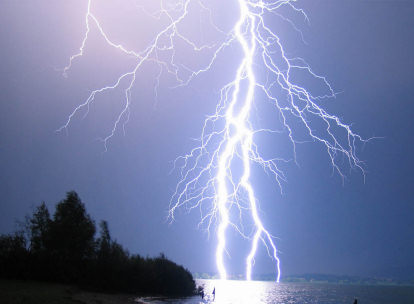
While you should get your air conditioner checked annually, the capacitor is a separate case in the sense that it can be fine one hour and zapped the next. Talk with your air conditioning repair company to find out the local rates and process for repairing the part.
And before you get too irate with the weather’s impact on your wallet, remember that lightning isn’t the only contributor to a burnt out capacitor—bugs and lizards can also get in the outdoor air conditioning unit and cause a short circuiting.
Subscribe to:
Posts (Atom)